
 Executive Privilege: presidential power, secrecy, and accountability
by
Executive Privilege--called "the definitive contemporary work on the subject" by the Journal of Politics--is widely considered the best in-depth history and analysis of executive privilege and its relation to the proper scope and limits of presidential power. This fourth edition is revised and updated to include the two Obama administrations and the first three years of the Trump administration. The new edition includes President Obama's failure to live up to the high expectations of his campaign promises, and, President Trump's controversies, including the investigations into Russian meddling in the 2016 election, the proposed addition of a citizenship question on the 2020 Census, and the ongoing inquiry into White House security clearances. "For an American people who (apparently) must be their president's keeper, this book is essential reading."--Rhetoric & Public Affairs
Executive Privilege: presidential power, secrecy, and accountability
by
Executive Privilege--called "the definitive contemporary work on the subject" by the Journal of Politics--is widely considered the best in-depth history and analysis of executive privilege and its relation to the proper scope and limits of presidential power. This fourth edition is revised and updated to include the two Obama administrations and the first three years of the Trump administration. The new edition includes President Obama's failure to live up to the high expectations of his campaign promises, and, President Trump's controversies, including the investigations into Russian meddling in the 2016 election, the proposed addition of a citizenship question on the 2020 Census, and the ongoing inquiry into White House security clearances. "For an American people who (apparently) must be their president's keeper, this book is essential reading."--Rhetoric & Public Affairs
 The Imperial Presidency
by
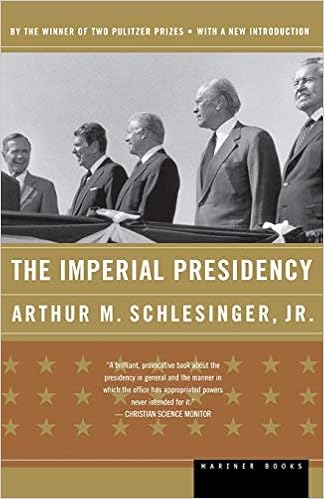
From two-time Pulitzer Prize-winning historian Arthur M. Schlesinger, Jr., comes one of the most important and influential investigations of the American presidency. The Imperial Presidency traces the growth of presidential power over two centuries, from George Washington to George W. Bush, examining how it has both served and harmed the Constitution and what Americans can do about it in years to come. The book that gave the phrase "imperial presidency" to the language, this is a work of "substantial scholarship written with lucidity, charm, and wit" (The New Yorker).
The Imperial Presidency
by
From two-time Pulitzer Prize-winning historian Arthur M. Schlesinger, Jr., comes one of the most important and influential investigations of the American presidency. The Imperial Presidency traces the growth of presidential power over two centuries, from George Washington to George W. Bush, examining how it has both served and harmed the Constitution and what Americans can do about it in years to come. The book that gave the phrase "imperial presidency" to the language, this is a work of "substantial scholarship written with lucidity, charm, and wit" (The New Yorker).
 Presidential Power : unchecked and unbalanced
by
A new history and evaluation of the "imperial presidency." Recent presidents have exploited the power of the American presidency more fully than their predecessors--and with greater consequence than the framers of the Constitution anticipated. This book, in the tradition of Arthur Schlesinger's great work The Imperial Presidency (1973), explores how American presidents--especially those of the past three decades--have increased the power of the presidency at the expense of democracy. Matthew Crenson and Benjamin Ginsberg provide a fascinating history of this trend, showing that the expansion of presidential power dates back over one hundred years. Presidential Power also looks beyond the president's actions in the realm of foreign policy to consider other, more hidden, means that presidents have used to institutionalize the power of the executive branch.
Presidential Power : unchecked and unbalanced
by
A new history and evaluation of the "imperial presidency." Recent presidents have exploited the power of the American presidency more fully than their predecessors--and with greater consequence than the framers of the Constitution anticipated. This book, in the tradition of Arthur Schlesinger's great work The Imperial Presidency (1973), explores how American presidents--especially those of the past three decades--have increased the power of the presidency at the expense of democracy. Matthew Crenson and Benjamin Ginsberg provide a fascinating history of this trend, showing that the expansion of presidential power dates back over one hundred years. Presidential Power also looks beyond the president's actions in the realm of foreign policy to consider other, more hidden, means that presidents have used to institutionalize the power of the executive branch.
 The Unitary Executive Theory : a danger to constitutional government
by
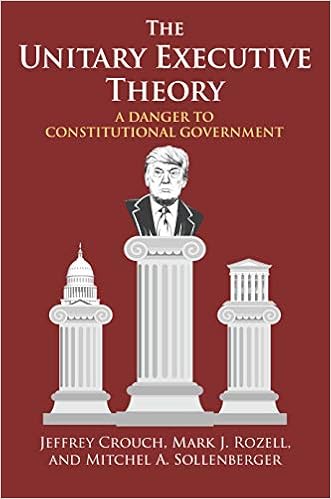
"I have an Article II," Donald Trump has announced, citing the US Constitution, "where I have the right to do whatever I want as president." Though this statement would have come as a shock to the framers of the Constitution, it fairly sums up the essence of "the unitary executive theory." This theory, which emerged during the Reagan administration and gathered strength with every subsequent presidency, counters the system of checks and balances that constrains a president's executive impulses. It also, the authors of this book contend, counters the letter and spirit of the Constitution. In their account of the rise of unitary executive theory over the last several decades, the authors refute the notion that this overweening view of executive power has been a common feature of the presidency from the beginning of the Republic. Rather, they show, it was invented under the Reagan Administration, got a boost during the George W. Bush administration, and has found its logical extension in the Trump administration. This critique of the unitary executive theory reveals it as a misguided model for understanding presidential powers. While its adherents argue that greater presidential power makes government more efficient, the results have shown otherwise. Dismantling the myth that presidents enjoy unchecked plenary powers, the authors advocate for principles of separation of powers--of checks and balances--that honor the Constitution and support the republican government its framers envisioned. A much-needed primer on presidential power, from the nation's founding through Donald Trump's impeachment, The Unitary Executive Theory: A Danger to Constitutional Government makes a robust and persuasive case for a return to our constitutional limits.
The Unitary Executive Theory : a danger to constitutional government
by
"I have an Article II," Donald Trump has announced, citing the US Constitution, "where I have the right to do whatever I want as president." Though this statement would have come as a shock to the framers of the Constitution, it fairly sums up the essence of "the unitary executive theory." This theory, which emerged during the Reagan administration and gathered strength with every subsequent presidency, counters the system of checks and balances that constrains a president's executive impulses. It also, the authors of this book contend, counters the letter and spirit of the Constitution. In their account of the rise of unitary executive theory over the last several decades, the authors refute the notion that this overweening view of executive power has been a common feature of the presidency from the beginning of the Republic. Rather, they show, it was invented under the Reagan Administration, got a boost during the George W. Bush administration, and has found its logical extension in the Trump administration. This critique of the unitary executive theory reveals it as a misguided model for understanding presidential powers. While its adherents argue that greater presidential power makes government more efficient, the results have shown otherwise. Dismantling the myth that presidents enjoy unchecked plenary powers, the authors advocate for principles of separation of powers--of checks and balances--that honor the Constitution and support the republican government its framers envisioned. A much-needed primer on presidential power, from the nation's founding through Donald Trump's impeachment, The Unitary Executive Theory: A Danger to Constitutional Government makes a robust and persuasive case for a return to our constitutional limits.
 Analyzing Marx: Morality, Power and History
by
In this book Marx is revealed as a powerful contributor to the debates that now dominate philosophy and political theory. Using the techniques of analytic philosophy to unite Marx's general statements with his practice as historian and activist, Richard W. Miller derives important arguments about the rational basis of morality, the nature of power, and the logic of testing and explanation. The book also makes Marx's theory of change useful for current social science, by replacing economic determinist readings with a new interpretation in which systems of power relations are the basis of change. Part One discusses Marx's criticisms of the moral point of view as a basis for social choice. The outlook that emerges is humane but antimoral. Part Two argues that Marx's concept of the ruling class is a means, of measuring political power that is ignored yet urgently needed by present-day social science. Part Three bases Marx's theory of history on the dynamics of power, challenging both the standard, economic determinist readings of the theory and standard conceptions of science.
Analyzing Marx: Morality, Power and History
by
In this book Marx is revealed as a powerful contributor to the debates that now dominate philosophy and political theory. Using the techniques of analytic philosophy to unite Marx's general statements with his practice as historian and activist, Richard W. Miller derives important arguments about the rational basis of morality, the nature of power, and the logic of testing and explanation. The book also makes Marx's theory of change useful for current social science, by replacing economic determinist readings with a new interpretation in which systems of power relations are the basis of change. Part One discusses Marx's criticisms of the moral point of view as a basis for social choice. The outlook that emerges is humane but antimoral. Part Two argues that Marx's concept of the ruling class is a means, of measuring political power that is ignored yet urgently needed by present-day social science. Part Three bases Marx's theory of history on the dynamics of power, challenging both the standard, economic determinist readings of the theory and standard conceptions of science.
 Comprehending Power in Christian Social Ethics
by
Christine Firer Hinze examines how socio-political power has been modeled in recent social theory and Christian ethics, and considers its theological and sociological underpinnings. The interaction of two models of power, "power over" and "power to" is traced in the works of selected religious (Reinhold Niebuhr, Jacques Maritain, Paul Tillich, and Martin Luther King, Jr.) and social (Max Weber, Karl Marx, Hannah ARendt, Michel Foucault, and Anthony Giddens) theorists of the past century. Hinze advances a constructive argument in favor of a theory that systematically integrates power's superordinating and collaborative features, and does so in a manner that coheres with the ethicist's underlying theological and sociological commitments. Appealing to a variety of warrants, she offers a comprehensive approach to power that takes "power to" as its descriptive and normative starting point and relegates "power over" to a limited and strictly instrumental role in socio-political practice.
Comprehending Power in Christian Social Ethics
by
Christine Firer Hinze examines how socio-political power has been modeled in recent social theory and Christian ethics, and considers its theological and sociological underpinnings. The interaction of two models of power, "power over" and "power to" is traced in the works of selected religious (Reinhold Niebuhr, Jacques Maritain, Paul Tillich, and Martin Luther King, Jr.) and social (Max Weber, Karl Marx, Hannah ARendt, Michel Foucault, and Anthony Giddens) theorists of the past century. Hinze advances a constructive argument in favor of a theory that systematically integrates power's superordinating and collaborative features, and does so in a manner that coheres with the ethicist's underlying theological and sociological commitments. Appealing to a variety of warrants, she offers a comprehensive approach to power that takes "power to" as its descriptive and normative starting point and relegates "power over" to a limited and strictly instrumental role in socio-political practice.
 Ethics and Capitalism
by
The essays in Ethics and Capitalism address the question of ensuring ethical and just societies within a capitalist system without sacrificing productivity.
Ethics and Capitalism
by
The essays in Ethics and Capitalism address the question of ensuring ethical and just societies within a capitalist system without sacrificing productivity.
 Ethics in a World of Power: The Political Ideas of Friedrich Meinecke
by
Writing from a country shattered by two World Wars and by Nazi barbarism, Friedrich Meinecke, Germany's foremost historian of this century, was deeply troubled by the problem of reconciling power and justice in international affairs. This study of his political philosophy traces his thinking about nationalism and power politics, the dilemmas that beset the man of action in political life, and the possibility of "ethics in a world of power." Historians, political scientists, philosophers, and students of international affairs will welcome this further contribution to a theme highlighted by such contemporary spokesmen as George Kennan m1d Reinhold Niebuhr. The author studied under Meinecke and used primary sources in Germany. Originally published in 1958. The Princeton Legacy Library uses the latest print-on-demand technology to again make available previously out-of-print books from the distinguished backlist of Princeton University Press. These editions preserve the original texts of these important books while presenting them in durable paperback and hardcover editions. The goal of the Princeton Legacy Library is to vastly increase access to the rich scholarly heritage found in the thousands of books published by Princeton University Press since its founding in 1905.
Ethics in a World of Power: The Political Ideas of Friedrich Meinecke
by
Writing from a country shattered by two World Wars and by Nazi barbarism, Friedrich Meinecke, Germany's foremost historian of this century, was deeply troubled by the problem of reconciling power and justice in international affairs. This study of his political philosophy traces his thinking about nationalism and power politics, the dilemmas that beset the man of action in political life, and the possibility of "ethics in a world of power." Historians, political scientists, philosophers, and students of international affairs will welcome this further contribution to a theme highlighted by such contemporary spokesmen as George Kennan m1d Reinhold Niebuhr. The author studied under Meinecke and used primary sources in Germany. Originally published in 1958. The Princeton Legacy Library uses the latest print-on-demand technology to again make available previously out-of-print books from the distinguished backlist of Princeton University Press. These editions preserve the original texts of these important books while presenting them in durable paperback and hardcover editions. The goal of the Princeton Legacy Library is to vastly increase access to the rich scholarly heritage found in the thousands of books published by Princeton University Press since its founding in 1905.
 Globalizing Justice: the ethics of poverty and power
by
Combining deep moral argument with extensive factual inquiry, Richard Miller constructs a new account of international justice. Though a critic of demanding principles of kindness toward the global poor and an advocate of special concern for compatriots, he argues for standards of responsible conduct in transnational relations that create vast unmet obligations. Governments, firms and people in developed countries, above all, the United States, by failing to live upto these responsibilities, take advantage of people in developing countries.Miller's proposed standards of responsible conduct offer answers to such questions as: What must be done to avoid exploitation in transnational manufacturing? What framework for world trade and investment would be fair? What duties do we have to limit global warming? What responsibilities to help meet basic needs arise when foreign powers steer the course of development? What obligations are created by uses of violence to sustain American global power?Globalizing Justice provides new philosophical foundations for political responsibility, a unified agenda of policies for responding to major global problems, a distinctive appraisal of 'the American empire', and realistic strategies for a global social movement that helps to move humanity toward genuine global cooperation.
Globalizing Justice: the ethics of poverty and power
by
Combining deep moral argument with extensive factual inquiry, Richard Miller constructs a new account of international justice. Though a critic of demanding principles of kindness toward the global poor and an advocate of special concern for compatriots, he argues for standards of responsible conduct in transnational relations that create vast unmet obligations. Governments, firms and people in developed countries, above all, the United States, by failing to live upto these responsibilities, take advantage of people in developing countries.Miller's proposed standards of responsible conduct offer answers to such questions as: What must be done to avoid exploitation in transnational manufacturing? What framework for world trade and investment would be fair? What duties do we have to limit global warming? What responsibilities to help meet basic needs arise when foreign powers steer the course of development? What obligations are created by uses of violence to sustain American global power?Globalizing Justice provides new philosophical foundations for political responsibility, a unified agenda of policies for responding to major global problems, a distinctive appraisal of 'the American empire', and realistic strategies for a global social movement that helps to move humanity toward genuine global cooperation.
 Political Responsibility: responding to predicaments of power
by
Antonio Y. V#65533;zquez-Arroyo argues against the notion that modern predicaments of power can only be addressed ethically or philosophically through pristine concepts that operate outside of the political realm. By returning to the political, the individual is reintroduced to the binding principles of participatory democracy and the burdens of acting and thinking as a member of a collective. V#65533;zquez-Arroyo historicizes the ethical turn to better understand its ascendence and reworks Adorno's dialectic of responsibility to reassert the political in contemporary thought and theory.
Political Responsibility: responding to predicaments of power
by
Antonio Y. V#65533;zquez-Arroyo argues against the notion that modern predicaments of power can only be addressed ethically or philosophically through pristine concepts that operate outside of the political realm. By returning to the political, the individual is reintroduced to the binding principles of participatory democracy and the burdens of acting and thinking as a member of a collective. V#65533;zquez-Arroyo historicizes the ethical turn to better understand its ascendence and reworks Adorno's dialectic of responsibility to reassert the political in contemporary thought and theory.
 Power
by
This far-reaching study gives a concise and coherent overview ofthe debates surrounding the analysis of social power. The conceptof power is outlined, and its main dimensions are explored throughconsideration of various facets ? command, pressure,constraint, discipline, protest, and interpersonal power. The bookexamines both the theoretical debates that have arisen and thekinds of empirical materials relevant to them. Topics covered include the nature of the contemporary state,global economic power, world systems, business governance,professional power, social movements, and family dynamics. Power will be an indispensable introduction for studentsand researchers in sociology, politics, and the social sciencesgenerally.
Power
by
This far-reaching study gives a concise and coherent overview ofthe debates surrounding the analysis of social power. The conceptof power is outlined, and its main dimensions are explored throughconsideration of various facets ? command, pressure,constraint, discipline, protest, and interpersonal power. The bookexamines both the theoretical debates that have arisen and thekinds of empirical materials relevant to them. Topics covered include the nature of the contemporary state,global economic power, world systems, business governance,professional power, social movements, and family dynamics. Power will be an indispensable introduction for studentsand researchers in sociology, politics, and the social sciencesgenerally.